Pediatric Rehabilitation
Every child grows at their own pace, but when a baby is late to roll, sit or walk, or a child struggles with balance, coordination or posture, parents rightly worry. Early support makes a real difference. A child's brain and body are at their most adaptable in the early years, and the right therapy at the right time can shape long-term outcomes.
Pediatric Rehabilitation at Physiovista Healthcare Network offers child-friendly physiotherapy for infants, children and adolescents with developmental, neurological, orthopaedic and genetic conditions. We make therapy playful, goal-focused and family-centred, so children enjoy their sessions and parents feel confident helping at home.
About Our Pediatric Rehabilitation Service
Children are not small adults. Their bones, muscles and nervous systems are still developing, so assessment and treatment must be tailored to age and stage. In pediatric rehabilitation, we compare a child's skills with developmental milestones, identify what is holding progress back and design activities that build the next skill in a fun way.
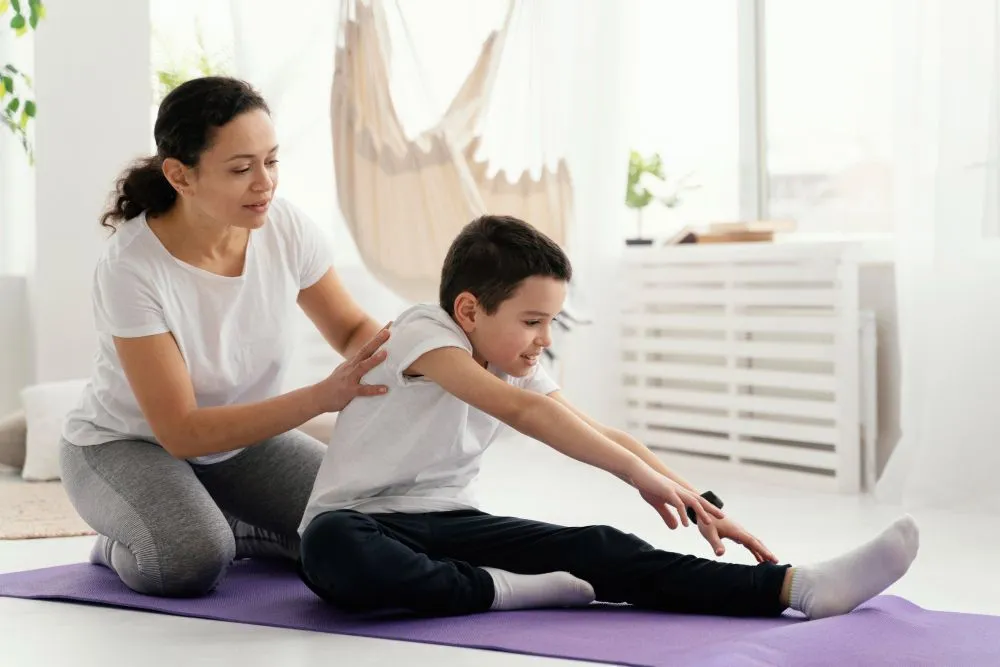
Our therapists use play, music, games and everyday routines to work on movement, strength, posture and coordination. Parents and caregivers are partners in the process, because progress is fastest when practice continues at home. We also coordinate with paediatricians, neurologists, orthopaedic surgeons, speech therapists, occupational therapists and special educators when a child needs wider support.
Consider an assessment if your child:
Conditions We Treat in Pediatric Rehabilitation
We manage a wide range of developmental and pediatric conditions, including:
Our Rehab Process
Every pediatric patient at Physiovista follows a structured, step-by-step pathway.
Developmental Assessment
Family-Centred Goals
Play-Based Therapy
Tone, Posture and Movement Training
Gait and Mobility Training
Parent Training and Home Programme
Regular Review and Transition Planning
Technologies We Use
Alongside skilled hands-on care, we use specialised child-friendly equipment and therapeutic tools to support development.
Why Choose Physiovista for Pediatric Care?
What to Expect at Your Child's First Visit
The first session lasts about 45 to 60 minutes and is relaxed and playful. We talk with you about your child's birth, development and concerns, observe play and movement, and carry out a gentle examination. Please bring your child's favourite toy, medical records, vaccination or growth charts and any previous therapy reports.
At home: give your baby supervised tummy time, let toddlers move freely on the floor, avoid keeping children in walkers or seats for long periods, praise effort and keep home exercises short and fun, because children learn best through play.
Frequently Asked Questions
If your child is missing milestones, has unusual stiffness or floppiness, walks abnormally, or you simply feel something is not right, an assessment can clarify. It is better to check early than to wait.
Cerebral palsy is a lifelong condition, but therapy can greatly improve movement, comfort, independence and quality of life. Early and consistent therapy matters.
A tilt often comes from tight neck muscles (torticollis). It responds very well to early gentle stretching and positioning, so please book an assessment promptly.
Some toddlers toe walk briefly while learning to walk. If it continues past age two or three, or is stiff or one-sided, it should be assessed.
No. Sessions are play-based and adapted to each child. We go at your child's pace.
Frequency depends on age and condition. We will recommend a schedule and a home programme, and review it regularly.
Yes, parents are encouraged to be present and take part so they can continue exercises at home.
Every baby is different, but if your baby is not holding the head up by about four months, not sitting by nine months or not walking by eighteen months, an assessment is wise. Trust your instincts and ask early.