Posture Studio
Hours at a desk, a laptop on the sofa, a phone held low and a heavy school bag all shape the way we stand and sit. Over time, the body adapts to these positions. Shoulders round, the head drifts forward, the lower back flattens or over-arches, and the result can be neck pain, backache, headaches and fatigue. Poor posture rarely hurts on day one, which is why many people discover it only after months of discomfort.
The Posture Studio at Physiovista Healthcare Network is a dedicated service for assessing, correcting and preventing posture-related problems. Using digital analysis, hands-on therapy and personalised exercise, we help you stand taller, move better and set up your workspace to protect your spine.
About Our Posture Studio
Posture is not one fixed pose. It is the way your body organises itself at rest and in movement. Good posture means your joints are well aligned and your muscles share the load efficiently. Poor posture means some muscles are overworked and tight while others are weak and switched off.
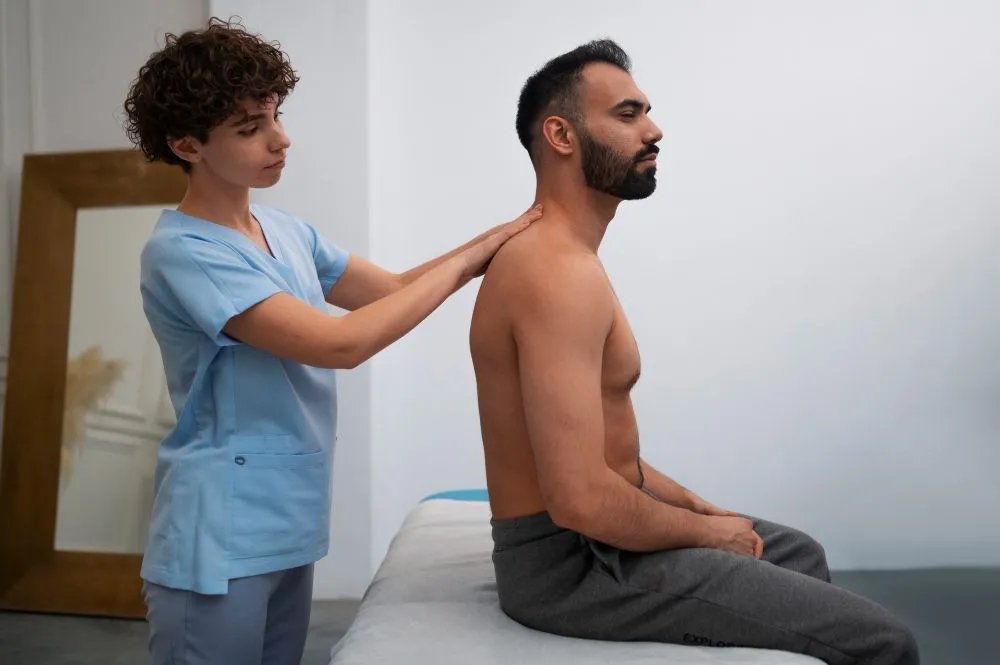
At the Posture Studio, we do not just tell you to sit up straight. We measure posture objectively using photographic and digital analysis, test muscle length and strength, assess movement habits and review your work, study and sleep set-up. We then design a targeted plan to release tight areas, activate weak muscles, retrain habits and improve your environment. The service suits office workers, students, gamers, drivers, teachers, new mothers, athletes and older adults.
Visit our Posture Studio if you have:
Conditions and Problems We Address
Our team manages a wide range of posture-related issues, including:
Our Process
Every posture patient at Physiovista follows a structured, step-by-step pathway.
Digital Posture Analysis
Movement and Muscle Assessment
Ergonomic and Lifestyle Review
Release and Mobilise
Activate and Strengthen
Retrain Habits
Review and Maintain
Technologies We Use
Alongside skilled hands-on care, we use modern digital and objective posture technologies to support assessment and correction.
Why Choose Physiovista Posture Studio?
What to Expect at Your Posture Studio Visit
The first session takes around 60 minutes. We take posture photographs or scans, test movement and strength, and review your daily routine. Please wear fitted, comfortable clothing such as shorts and a sleeveless or fitted top so alignment is clearly visible, and bring photos of your workstation if possible.
Everyday habits: keep your screen at eye level, support your lower back, keep feet flat, take a movement break every 30 to 45 minutes, carry bags on both shoulders or use a backpack with both straps, and sleep with a pillow that keeps your neck in a neutral position.
Frequently Asked Questions
Yes. Posture is largely a habit supported by muscle balance. With targeted exercise, mobility work and awareness, most people improve noticeably.
Many people feel better within a few weeks, though lasting change in alignment usually takes two to three months of consistent practice.
A brace may give short-term awareness but does not strengthen muscles. We prefer exercises and habit change, using a brace only as a short aid.
It can. Forward head posture and tight neck and shoulder muscles are a common cause of tension and cervicogenic headaches.
There is no single perfect position. The best posture is your next posture, so change position often. Feet supported, back supported, screen at eye level and breaks every 30 to 45 minutes help.
Yes. Early correction is easier. We screen for scoliosis and advise on school bag use and study set-up.
A curve or uneven shoulders should be assessed. Many are postural, but some are structural conditions like scoliosis that need monitoring or treatment.