Redefining Physiotherapy Through Advanced Robotic Rehabilitation
At Physiovista Healthcare Network Pvt. Ltd., we are embracing the future of physiotherapy and rehabilitation through the integration of advanced robotic technology with expert clinical care.
Robotic rehabilitation can provide highly repetitive, controlled and measurable movement training that complements conventional physiotherapy. For patients with neurological and selected orthopaedic conditions, this technology can help therapists deliver intensive, task-oriented rehabilitation while adapting treatment to the individual's abilities and progress.
What is Robotic Rehabilitation?
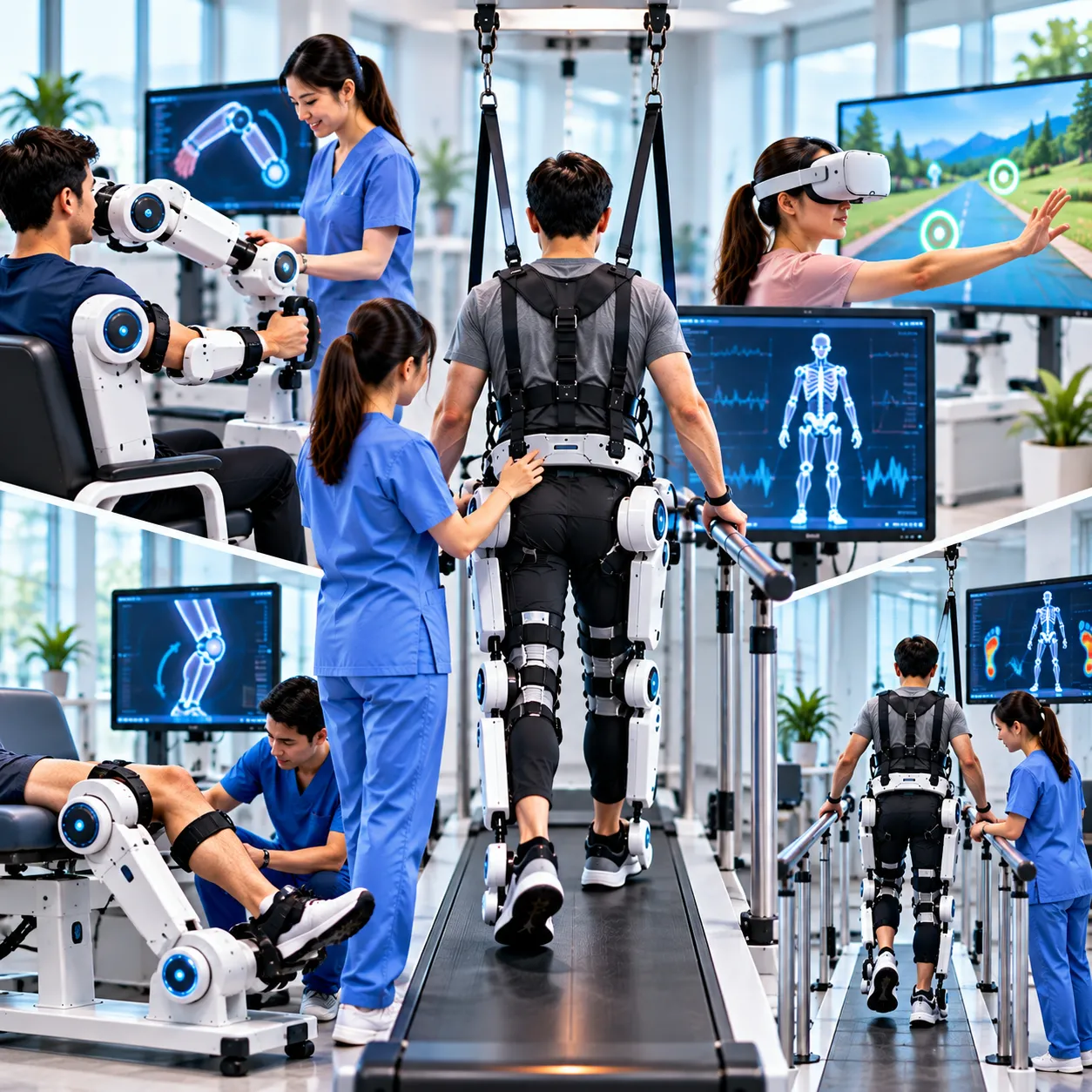
Robotic rehabilitation uses specialized technology to assist patients in performing controlled and repetitive movements of the legs, arms, hands and other body regions.
Unlike conventional rehabilitation alone, robotic systems can provide:
At Physiovista, robotics are used as an extension of the physiotherapist's expertise, not as a replacement for hands-on clinical care. Our therapists assess the patient, establish appropriate goals and determine how robotic technology can be incorporated into an individualized rehabilitation program.
Why Robotic Rehabilitation?
More Repetition. More Practice. Better Engagement.
Recovery of movement often requires patients to practice specific movements repeatedly. Robotic systems can make it easier to deliver intensive and structured practice while allowing the therapist to monitor the patient's performance.
Intensive Rehabilitation
Robotic systems can facilitate a high volume of task-specific repetitions during a therapy session. This is particularly valuable when conventional movement is difficult or when a patient requires significant assistance to perform a movement.
Early & Supported Movement
Some patients have very limited strength or voluntary movement following neurological injury or illness. Appropriately selected robotic or assisted technologies may allow supported movement training at an earlier stage of rehabilitation. Early movement training can help patients begin practicing functional patterns while their abilities are developing.
Precise & Controlled Movement
Robotic systems can provide consistent movement trajectories and controlled assistance. Parameters can be adjusted according to the patient's clinical profile, allowing therapy to remain challenging but achievable:
- Range of motion
- Strength & Speed
- Assistance requirement
- Movement ability & Rehabilitation stage
Repetitive Task-Specific Training
Repetition is an important component of motor relearning. Robotic rehabilitation can provide repeated practice of selected movements while allowing the therapist to progressively modify the level of assistance. The aim is to encourage the patient's active participation and motor learning, rather than simply moving the body passively.
Real-Time Feedback
Feedback can make rehabilitation more interactive. Depending on the technology used, patients may receive visual or other forms of performance feedback that help them understand their movement and effort. This can encourage patients to actively participate in their rehabilitation rather than simply receiving treatment.
Measurable Progress
One of the important advantages of technology-assisted rehabilitation is the ability to collect objective performance information. Where supported by the equipment, therapists monitor recovery milestones:
- Movement performance
- Repetition volume
- Assistance level & Range of movement
- Walking performance & Functional progress