Sports injuries can happen to anyone—from recreational runners and gym enthusiasts to professional athletes. Sprains, strains, muscle injuries, ligament problems, and joint injuries can temporarily prevent you from doing the activities you enjoy.
Physiotherapy plays an important role in a safe, structured, and progressive return to activity.
Why Is Physiotherapy Important After a Sports Injury?
After an injury, simply waiting for pain to disappear may not be enough. The affected muscles and joints may become weak or stiff, and returning to sport too quickly can increase the risk of another injury.
Physiotherapy focuses on restoring movement, strength, coordination, and athletic confidence.
What Happens During Your First Physiotherapy Session?
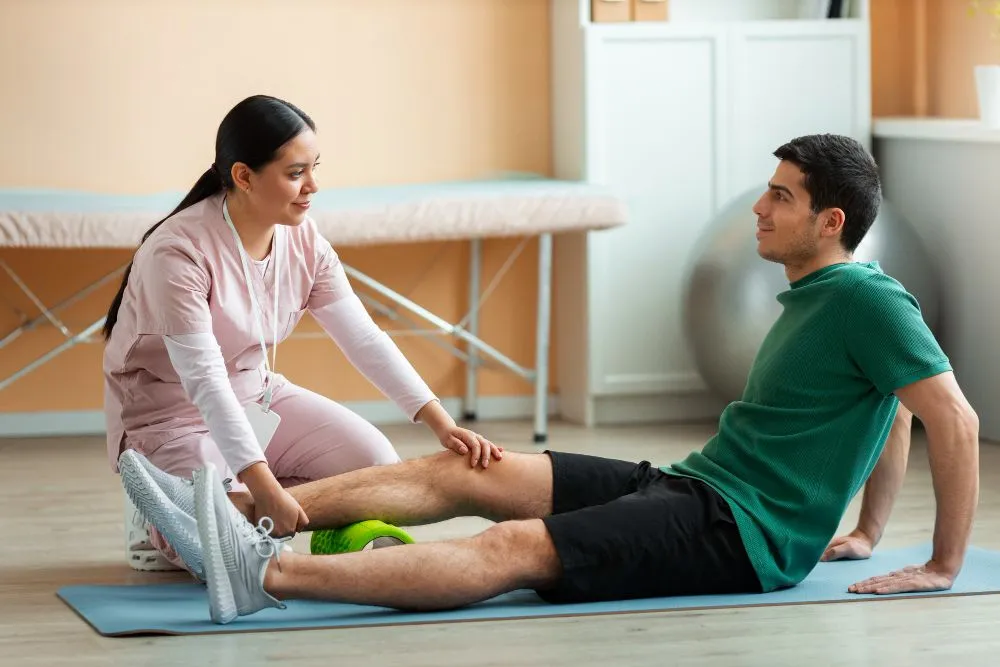
Your physiotherapist will generally begin by discussing your injury, symptoms, activity level, and recovery goals.
They may assess:
- Joint movement: Measuring active and passive range of motion.
- Muscle strength: Objective testing of strength symmetry across limbs.
- Flexibility: Identifying muscle tightness that impairs movement.
- Balance and coordination: Testing stability and proprioceptive control.
- Movement patterns: Analyzing biomechanics during sport-specific drills.
- Pain and functional limitations: Understanding triggers and day-to-day impacts.
Based on the assessment, your physiotherapist will develop a rehabilitation plan suited to your sport and personal milestones.
Common Stages of Sports Rehabilitation
Stage 1: Managing Symptoms
The initial focus is on controlling pain and swelling while protecting the injured tissue and maintaining appropriate gentle movement.
Stage 2: Restoring Mobility
Gentle exercises and hands-on mobility work help restore normal joint mechanics and reduce stiffness.
Stage 3: Building Strength
Progressive strengthening exercises help the injured area regain the strength needed for everyday activities and athletic demands.
Stage 4: Improving Balance and Coordination
Depending on the injury, balance, stability, and neuromuscular control exercises are introduced to prepare for dynamic movements.
Stage 5: Returning to Sport
The final stage involves gradually introducing sport-specific movements, agility, cutting, and acceleration drills. The goal is to return safely rather than rushing back too soon.
How Long Does Recovery Take?
Recovery time depends on the type and severity of the injury, your overall health, activity level, and how consistently you follow your rehabilitation program.
Your physiotherapist will monitor your progress with measurable criteria and adjust exercises as your condition improves.
Don’t Rush Your Return
Feeling better does not always mean that your body is fully ready for intense activity. Returning to sport before adequate strength, mobility, and control have been restored significantly increases the risk of reinjury. A structured rehabilitation program ensures you progress safely.
Get Professional Support for Your Recovery
Whether you’re recovering from a gym injury, running injury, sports-related strain, or another musculoskeletal problem, professional assessment can help you understand your condition and plan your recovery.
Book a physiotherapy assessment with our center and work toward a safe, confident return to the activities you love.