
Spine Clinic
Back pain and neck pain are among the most common reasons people miss work, skip exercise and lose sleep. Many people live with spinal pain for months or years, hoping it will settle on its own. It often doesn't, because the cause is usually a combination of weak muscles, stiff joints, poor posture and daily habits.
The Spine Clinic at Physiovista Healthcare Network treats spinal conditions through evidence-based physiotherapy and rehabilitation. We focus on finding the cause of your pain, not just calming the symptoms, and building a plan that helps you move, work and live comfortably again.
About Our Spine Clinic
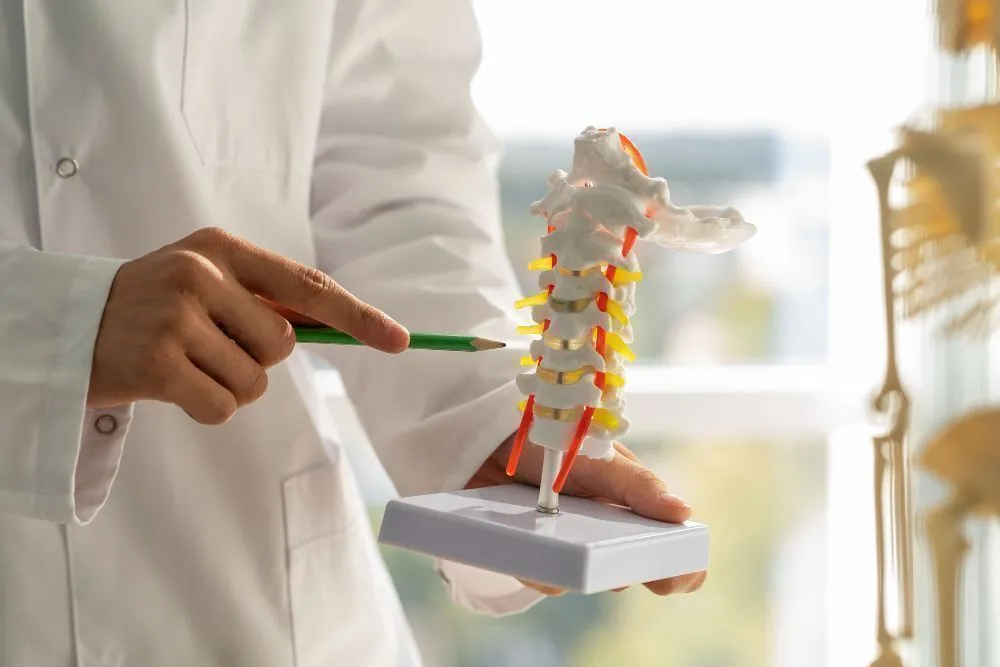
The spine is a complex structure of vertebrae, discs, joints, ligaments, muscles and nerves. A problem in any one of these can produce pain in the neck, upper back, lower back, buttocks, arms or legs.
At our spine clinic, every patient begins with a detailed assessment by a trained physiotherapist. We look at how your spine moves, how your muscles support it and how your daily activities load it. Our approach is non-surgical and movement-based, built on manual therapy, targeted exercise, education and modern physiotherapy technology.
Many patients with spinal pain recover well without surgery when they receive the right treatment at the right time. If your assessment shows that you need a surgeon's opinion, we will tell you clearly and coordinate your referral.
Our Spine Clinic is right for you if you have:
Conditions We Treat at the Spine Clinic
Our team manages a wide range of neck and back problems, including:
Our Rehab Process
Every spine patient at Physiovista follows a structured, step-by-step pathway.
Detailed Assessment
Clear Diagnosis and Explanation
Pain Relief Phase
Mobility and Movement Restoration
Strength and Stability Training
Functional Training and Return to Activity
Prevention and Self-Management
Technologies We Use
Alongside skilled hands-on care, we use modern physiotherapy technologies to support recovery.
Why Choose Physiovista for Spine Care?
Frequently Asked Questions
If your pain lasts more than a week, keeps returning or limits your daily activities, physiotherapy is strongly recommended. It treats the cause of the pain, not only the symptoms, and helps prevent the problem from coming back.
In many cases, yes. A large number of disc problems improve with a structured programme of physiotherapy, posture correction and exercise. Surgery is usually considered only when there is severe or progressive nerve weakness or when conservative care has not worked. Your physiotherapist will assess which path suits you.
Sciatica is usually caused by irritation of a nerve in the lower back and is often manageable with physiotherapy. However, sudden leg weakness, loss of bladder or bowel control, or numbness in the groin area are medical emergencies, and you should seek immediate care.
This depends on your condition, its duration and your goals. Some patients feel relief within a few sessions, while chronic conditions need a longer programme. After your assessment, we will give you an estimated timeline.
No. You can book an assessment without a scan. If you already have reports, please bring them. If we think imaging is needed, we will advise you.
Treatment should not be unbearably painful. You may feel mild soreness after some techniques or exercises, and your therapist will always adjust treatment to your comfort and tolerance.
Yes. Long hours at a desk, looking down at a phone or sitting on a soft sofa can overload your spine. Posture correction and ergonomic changes are a core part of our programme.
Seek urgent medical care if your back or neck pain follows a major accident, comes with fever, unexplained weight loss, loss of bladder or bowel control, or progressive weakness in your limbs.